
KeePass is free, secure and actively maintained, so almost nobody leaves it over quality. They leave because it has no hosted team sharing, no admin console and no audit log. If that is your problem, Bitwarden at $4.00 per user per month is the natural upgrade because it keeps the open-source model. TeamPassword at $2.41 is simpler for non-technical teams, Passbolt keeps everything self-hosted, and Zoho Vault is the only free tier here that includes shared vaults.
KeePass Alternatives Compared (September 2026)
KeePass is included as a row. It wins on price and loses on everything to do with teams.
| Product | Best for | Team price (per user/month, annual) | Team sharing + admin | Free plan | Open source |
|---|---|---|---|---|---|
| KeePass (the baseline) | Individuals who want free and offline | $0 | None | Yes, entirely free | Yes |
| Bitwarden | Keeping open source, gaining team features | $4.00 Teams · $6.00 Enterprise | Yes, collections and roles | Yes | Yes |
| TeamPassword | Non-technical teams sharing logins | $2.41 Standard · $5.25 Enterprise | Yes, groups and roles | No, 14-day trial | No |
| Passbolt | Staying self-hosted, with real permissions | Free Community Edition · paid Pro | Yes, per-credential ACLs | Yes | Yes |
| Proton Pass | Privacy, EU residency, lowest paid price | $1.99 Essentials · $4.85 Professional | Yes | Yes | Yes |
| 1Password | Best overall experience | $8.99 Business · Starter Pack $24.95/mo for 10 | Yes | No, 14-day trial | No |
| Zoho Vault | A free tier that includes team sharing | $0 Free · $4.50 Professional · $7.20 Enterprise | Yes, even on free | Yes, free forever | No |
| NordPass | Budget option at 10+ seats | Teams $1.79 to $1.99 · Business $3.59 to $3.99 | Yes, from Business | Yes, 1 active session | No |
| Keeper | Compliance and granular audit | Quote-only, around $3.75 Business | Yes, deepest RBAC | No | No |
| Password Boss | Managed service providers | Not publicly disclosed | Yes, multi-tenant | No | No |
| LastPass | Name recognition, with caveats | $4.25 Teams · $7.00 Business | Yes | No | No |
How We Evaluated These, and Our Disclosure
Disclosure: this article is published by TeamPassword, and TeamPassword appears second below. We have put Bitwarden first because for most people leaving KeePass it is the more honest recommendation: it preserves the open-source model that led you to KeePass in the first place, and we do not. Weigh the rest accordingly.
Criteria, in priority order for someone leaving KeePass:
- Real team sharing. Shared vaults or groups, per-person permissions, and an audit log. This is the actual reason for the switch, so it outranks price.
- Whether it preserves what you liked about KeePass, meaning open source, self-hosting, and no vendor lock-in.
- Usability without configuration. Autofill and mobile sync that work out of the box rather than via plugins.
- Cost, including seat minimums.
- Support, since KeePass offers community forums only.
Pricing verified September 2026. TeamPassword, 1Password, Bitwarden and Zoho's free tier were read from the vendors' own pricing pages. Dashlane and Keeper no longer publish per-seat pricing, and Password Boss never has.
What KeePass Actually Does Well
An honest comparison has to start here, because KeePass is not a bad product and the internet is full of pages pretending otherwise.
- It is genuinely free, with no tiers, no seats and no upsell. Nothing else on this list can say that.
- It is open source and heavily scrutinised, with a strong security track record over two decades.
- It is actively maintained. KeePass 2.61 and KeePassXC 2.7.12 both shipped in March 2026.
- It is offline by default. Your vault is a local
.kdbxfile. No vendor holds your data, so no vendor breach can expose it. For a threat model that treats cloud sync as the risk, this is a feature, not a limitation. - It is extensible, with a large plugin ecosystem.
KeePass vs KeePassXC: KeePass is the original Windows-first .NET application. KeePassXC is a community fork in C++ with native cross-platform builds and a more modern interface. Both use the same .kdbx format, so you can move between them freely. Neither adds hosted team sharing.
Why Teams Leave KeePass
The gap is specific, and it is not about security.
- No hosted multi-user sharing. The common workaround is putting the
.kdbxfile on a network share or cloud drive with a shared master password. That gives you no per-person access control, no way to revoke one person without changing the password for everybody, no audit trail, and a genuine risk of sync conflicts corrupting the database. - No admin console. You cannot see who has access, enforce 2FA across a team, or offboard someone centrally.
- No audit log. If you need to answer "who opened this credential and when", KeePass cannot tell you. For SOC 2 or similar, that is disqualifying.
- Autofill and mobile take configuration. Browser integration and phone sync work, but you assemble them from plugins and third-party apps rather than getting them by default.
- Support is community forums. Fine for a hobbyist, awkward when a credential outage is blocking your team.
If none of those apply to you, stay on KeePass. It will keep working and it will keep being free.
The Alternatives, Ranked
1. Bitwarden
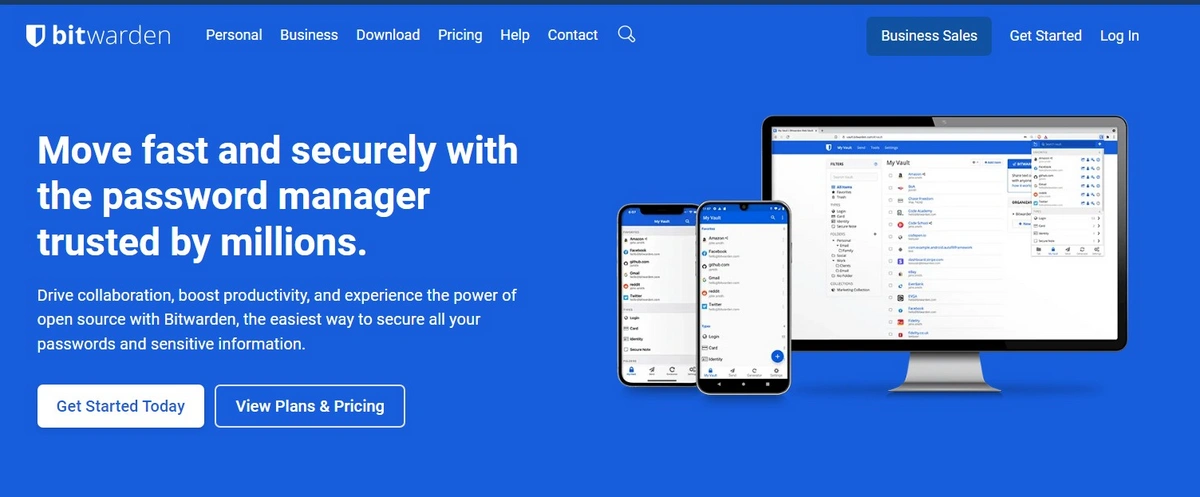
Best for: keeping the open-source model while gaining team features. Bitwarden Teams is $4.00 per user per month, Enterprise is $6.00, with no seat minimum and a genuinely free personal tier.
For most people leaving KeePass this is the right answer, and it is why we have ranked it above ourselves. Bitwarden is open source and independently audited, so you keep the verifiability that made KeePass attractive. You can self-host the server if you do not want a vendor holding your vaults, which preserves the offline-ish threat model. And you gain the things KeePass lacks: collections with role-based permissions, an admin console, event logs, and autofill plus mobile sync that work without assembly.
Strengths: open source and audited; self-hostable; free tier covering unlimited passwords on unlimited devices; Bitwarden Send for time-limited sharing; vault health reports.
Weaknesses: the interface is utilitarian, closer to KeePass than to 1Password, which may or may not be what you want. Its January 2026 price rise hit personal plans, though business pricing was untouched.
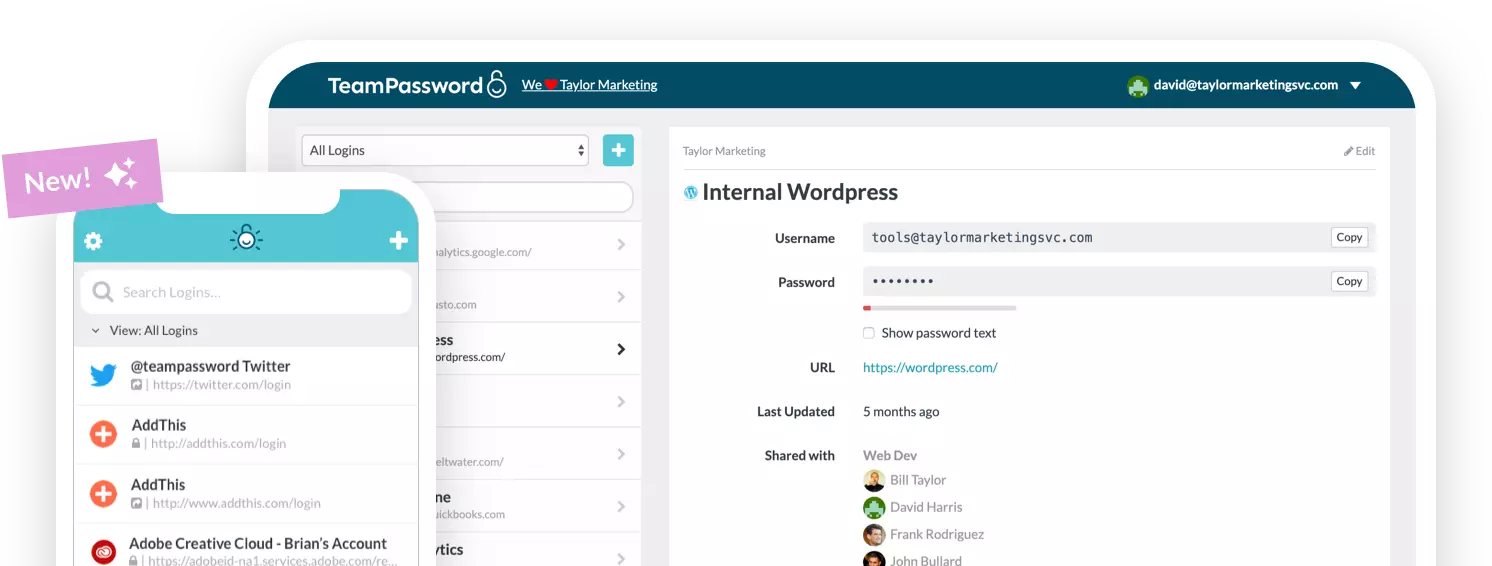
2. TeamPassword
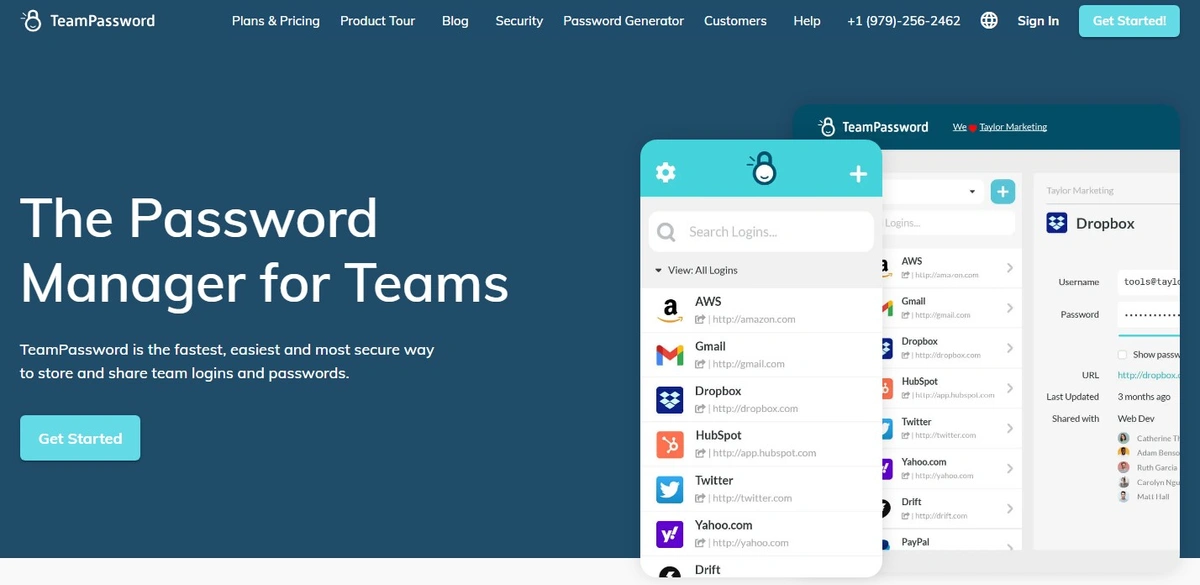
Best for: non-technical teams where adoption is the real risk. TeamPassword is $2.41 per user per month with a 3-user minimum, cheaper than Bitwarden Teams.
The case for us over Bitwarden is narrow and specific: if the people who need these credentials are not technical, the deciding factor is whether they will actually use the tool. TeamPassword is built around groups, onboarding takes minutes, and support is staffed by people rather than a forum. That is the opposite end of the spectrum from KeePass, which is precisely the point for an agency or a small business without an IT department.
Strengths: fast setup and high adoption; group-based sharing with one-click revocation; built-in TOTP authenticator; enforceable 2FA; detailed activity logs; SOC 2 certified; real human support.
Weaknesses: not open source, which may be a dealbreaker coming from KeePass. No self-hosting. Fewer advanced features than 1Password or Keeper, no automated password changing, and personal-vault features are thinner than a dedicated individual manager. See full pricing.
3. Passbolt
Best for: staying self-hosted, with permissions KeePass cannot do. Passbolt has a free, open-source Community Edition and paid Pro tiers.
If your objection to hosted managers is that you do not want anyone else holding your vault, Passbolt is the closest thing to KeePass with real team features bolted on properly. It is API-first with granular per-credential permissions, so you can share one login with one person without exposing a whole database. You run it, you patch it, you own it.
Strengths: open source; fully self-hosted; per-credential access control; API-first for automation; free Community Edition.
Weaknesses: you are accepting operational responsibility, including backups and upgrades. Less polished than the hosted options, and no mobile experience to match Bitwarden's.
4. Proton Pass
Best for: privacy, EU jurisdiction, and the lowest paid price. Proton Pass for Business is $1.99 per user per month on Essentials and $4.85 on Professional, with a real free tier.
Open source, end-to-end encrypted and Swiss-based, from the team behind Proton Mail. If you chose KeePass partly on privacy grounds, this preserves that reasoning while adding hosted team sharing and email aliasing.
Strengths: cheapest paid option here; open source; free tier; strong privacy posture and jurisdiction.
Weaknesses: the youngest product in this comparison, with an admin console less mature than 1Password's or Keeper's. Check the admin tooling before moving a large team.
5. 1Password
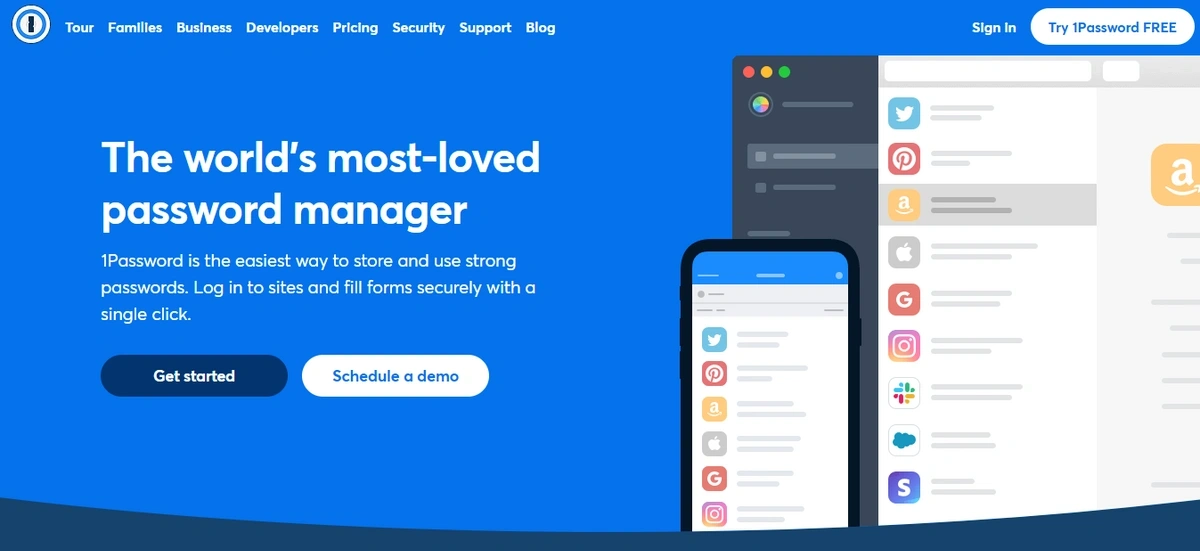
Best for: the most polished experience, if budget allows. 1Password Business is $8.99 per user per month after its March 2026 increase, with a Teams Starter Pack at $24.95 per month for 10 members.
The largest usability jump from KeePass available. Its Secret Key model means your master password alone cannot decrypt your vault, which is a genuine architectural strength, and it has no breach history.
Strengths: best-in-class interface and cross-platform apps; Secret Key; Travel Mode; Watchtower monitoring; free Families plan per Business seat; strong passkey support added August 2026.
Weaknesses: the most expensive option here at more than double NordPass Business. Not open source, no free tier, only a 14-day trial.
6. Zoho Vault
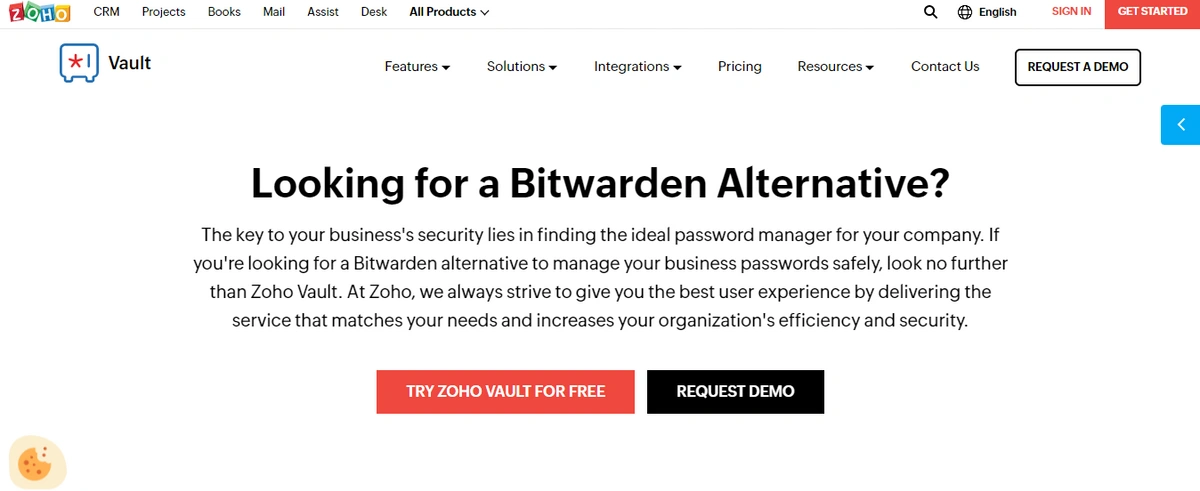
Best for: teams that need sharing but cannot pay anything. Zoho Vault Professional is $4.50 per user per month, Enterprise $7.20, Standard around $0.90, with a 5-user minimum on Professional.
This is the most underrated option for a KeePass team, because its free forever tier still includes shared vaults, role-based access and audit logs. If your budget is genuinely zero and you need to stop sharing a .kdbx file, this solves the problem for nothing. Native Windows and Mac desktop apps arrived in 2026.
Strengths: free tier with real team sharing and audit logs; deep Zoho suite integration; granular sharing privileges.
Weaknesses: not open source. The interface shows its enterprise-suite heritage, and it makes most sense if you are already in the Zoho ecosystem.
7. NordPass
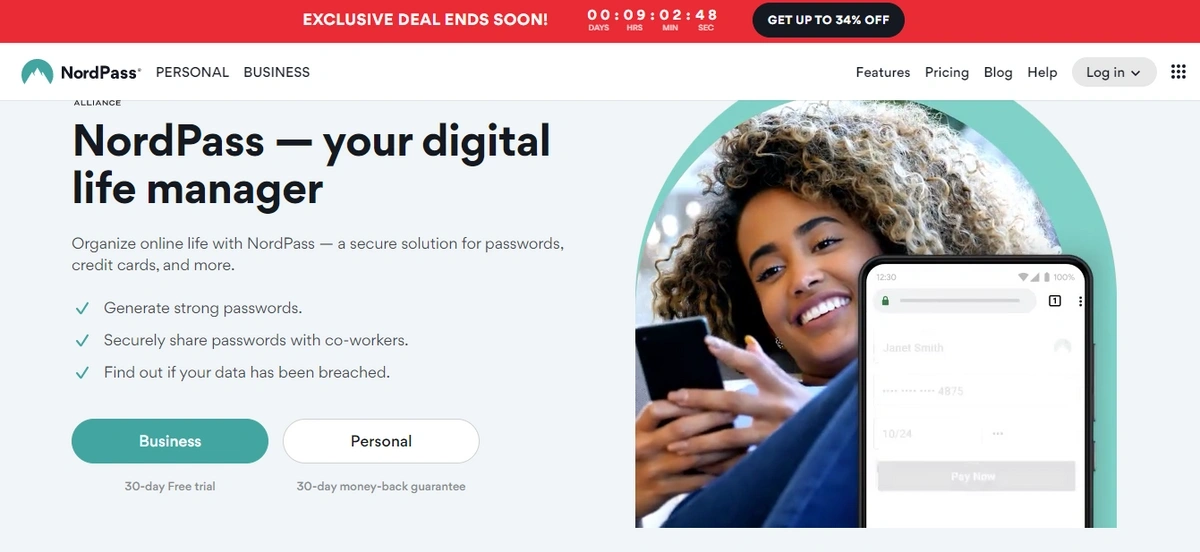
Best for: budget-conscious teams at 10 or more seats. NordPass Business is $3.59 to $3.99 per user per month with a 5-user minimum. No disclosed vault breach.
Strengths: unlimited item storage; Data Breach Scanner; TOTP and U2F support; polished consumer-grade interface; a free tier.
Weaknesses: closed source, which is a direct step away from what KeePass gave you. NordPass Teams at $1.79 to $1.99 is sold only as a fixed 10-seat pack, so a six-person team pays an effective $2.98 to $3.32 per person actually using it, and the free tier allows only one active session. More in our NordPass alternatives comparison.
8. Keeper
Best for: compliance-heavy teams needing the deepest audit trail. Keeper Business sits around $3.75 per user per month with a 5-user minimum, but Keeper is now quote-only and no longer publishes per-seat rates.
Strengths: the most granular role-based access control and audit reporting in this price range; compliance reporting for SOC 2, HIPAA and similar; privileged access management; secure file storage.
Weaknesses: quote-only pricing makes comparison hard. Its 2026 pivot toward PAM adds capability and complexity you may not want if you only need a shared vault.
9. Password Boss
Best for: managed service providers with many client tenants. Pricing is not publicly disclosed.
Built around multi-tenant architecture so an MSP can manage separate client vaults from one portal. A genuine niche fit that the general-purpose options handle awkwardly.
Strengths: multi-tenant MSP portal; remote deletion of company passwords from a lost or offboarded device; strong encryption, 2FA and dark web scanning.
Weaknesses: no public pricing at all. Irrelevant unless you are an MSP.
10. LastPass
Best for: almost nobody choosing fresh in 2026. LastPass Teams is $4.25 per user per month, Business $7.00, Business Max $9.00.
Coming from KeePass, whose entire appeal is a spotless security record and code you can read, LastPass is the hardest sell on this page:
- 2022: attackers exfiltrated backup servers containing encrypted vaults plus some unencrypted metadata. Researchers later traced tens of millions of dollars in cryptocurrency theft to seed phrases in those vaults.
- 2025: a $24.5 million class-action settlement.
- November 2025: a UK ICO fine of £1,228,283 under UK GDPR, covering up to 1.6 million UK users.
- June 2026: a third-party supply-chain breach exposed customer contact details and support cases via its CRM. Vaults were not affected, but disclosure came ten days after discovery.
See our LastPass alternatives guide if you are weighing it anyway.
Not Suitable for Teams
Norton Password Manager is free and standalone, tied to a free Norton account. It has no business tier and no secure sharing mechanism, so sharing means copying a password out in plain text. If you are leaving KeePass for team features, it does not solve your problem.
Which One Should You Pick?
- Want to keep open source and gain team sharing? Bitwarden.
- Team is non-technical and adoption is the risk? TeamPassword.
- Refuse to let a vendor hold your vault? Passbolt, self-hosted.
- Budget is zero but you need sharing? Zoho Vault's free tier.
- Privacy and jurisdiction are the driver? Proton Pass.
- Want the biggest usability jump and can pay? 1Password.
- You are an MSP? Password Boss.
- Nothing above applies? Stay on KeePass. Switching for its own sake is not an upgrade.
Frequently Asked Questions
Why would I switch away from KeePass if it is free?
Almost always for team sharing. KeePass has no hosted multi-user sharing, no admin console and no audit log, so teams end up syncing a database file over shared storage, which recreates the problem a password manager exists to solve. The other common reasons are autofill that works without plugin configuration, real support instead of community forums, and mobile sync you do not have to build yourself.
What is the best open-source alternative to KeePass?
Bitwarden, if you want hosted convenience with the option to self-host, at $4.00 per user per month for Teams with a free personal tier. Passbolt, if you want to run everything yourself with granular per-credential permissions. Proton Pass is also open source and the cheapest paid option at $1.99.
Is KeePass still safe and maintained in 2026?
Yes. KeePass 2.61 and KeePassXC 2.7.12 both shipped in March 2026, and both projects remain actively maintained with a strong security record. Safety is not why people leave KeePass. Team collaboration is.
Can KeePass be used by a team?
Not properly. There is no native multi-user sharing, so the workaround is putting the .kdbx file on a network share with a shared master password. That means no per-person access control, no way to revoke one person without changing the password for everyone, no audit trail, and a real risk of sync conflicts corrupting the file.
What is the difference between KeePass and KeePassXC?
KeePass is the original Windows-first .NET application. KeePassXC is a community fork in C++ with native cross-platform builds and a more modern interface. Both use the same .kdbx format, so you can move between them. Neither adds hosted team sharing.
Is there a free KeePass alternative with team sharing?
Zoho Vault is the strongest option, because its free forever tier includes shared vaults, role-based access and audit logs. Passbolt's Community Edition is free and self-hosted with real per-credential permissions if you will run it. Bitwarden's free tier is excellent but aimed at individuals rather than shared team vaults.
Try TeamPassword
If you are leaving KeePass because sharing a database file stopped scaling, and the people who need those credentials are not going to configure plugins, that is the gap TeamPassword fills.
Group-based sharing with one-click revocation, an integrated TOTP authenticator, enforceable 2FA, full activity logs, unlimited records and groups, granular user roles, free Google sign-in, and One-Time Share for handing a credential to a contractor without permanent access.
Plans start at $2.41 per user per month with a 3-user minimum. Try TeamPassword free for 14 days, no credit card required.