
Bitwarden is hard to beat on value, and most people who leave do so over usability rather than price or security. TeamPassword at $2.41 per user per month is the simplest option for a non-technical team. 1Password at $8.99 is the most polished. Proton Pass at $1.99 is the cheapest and stays open source. If you chose Bitwarden for auditable code or self-hosting, read the "what you give up" section before switching, because most alternatives cannot match that.
Bitwarden Alternatives Compared (September 2026)
Bitwarden is included as a row, and on paper it wins several columns.
| Product | Best for | Team price (per user/month, annual) | Seat minimum | Free plan | Open source |
|---|---|---|---|---|---|
| Bitwarden (the baseline) | Open source, value, self-hosting | $4.00 Teams · $6.00 Enterprise | None | Yes | Yes |
| TeamPassword | Non-technical teams sharing logins | $2.41 Standard · $5.25 Enterprise | 3 | No, 14-day trial | No |
| 1Password | Best overall experience | $8.99 Business · Starter Pack $24.95/mo for 10 | None on Business | No, 14-day trial | No |
| Proton Pass | Staying open source, lowest price | $1.99 Essentials · $4.85 Professional | None | Yes | Yes |
| NordPass | Polished interface on a budget | Teams $1.79 to $1.99 · Business $3.59 to $3.99 | Teams: 10-seat pack only. Business: 5 | Yes, 1 active session | No |
| Zoho Vault | A free tier with team sharing | $0 Free · $4.50 Professional · $7.20 Enterprise | 5 on Professional | Yes, free forever | No |
| Keeper | Compliance and granular audit | Quote-only, around $3.75 Business | 5 | No | No |
| Dashlane (Omnix) | Credential-risk tooling | Quote-based | None published | No, discontinued Sept 2025 | No |
| LastPass | Name recognition, with caveats | $4.25 Teams · $7.00 Business · $9.00 Business Max | None | No | No |
How We Evaluated These, and Our Disclosure
Disclosure: this article is published by TeamPassword, and TeamPassword appears first below. Weigh that accordingly. Bitwarden is a genuinely excellent product and this page does not pretend otherwise. Proton Pass is also cheaper than us, which we have said in the opening line and in the table.
Criteria, in priority order for someone leaving Bitwarden:
- Adoption and usability, since that is the usual reason for the switch and the usual reason rollouts fail.
- What you give up, because Bitwarden's open-source and self-hosting story is rare and most alternatives cannot match it.
- Cost for an actual team, including seat minimums and fixed packs.
- Support model, managed versus community.
- Security and transparency record.
Pricing verified September 2026. TeamPassword, 1Password, Bitwarden and Zoho's free tier were read from the vendors' own pricing pages. Dashlane and Keeper no longer publish per-seat pricing.
What Bitwarden Does Well
Worth stating plainly, because it sets the bar every option below has to clear.
- $4.00 per user per month for Teams and $6.00 for Enterprise, with no seat minimum. Only Proton Pass and TeamPassword undercut that.
- Open source and independently audited. Its security claims can be verified rather than trusted.
- Self-hosting. You can run the server yourself and keep vault data on your own infrastructure. Almost nothing else in this category offers that.
- A genuinely useful free tier covering unlimited passwords across unlimited devices for individuals.
- Scale. Roughly 15 million users and 80,000 businesses as of mid-2026.
On the 2026 price rise: in January 2026 Bitwarden roughly doubled personal Premium from about $10 to about $20 per year, its first increase in a decade, and adjusted Families. Business pricing was untouched. If you read that news and assumed your Teams bill was going up, it was not.
Why Teams Leave Bitwarden
- The interface is utilitarian. That is a feature for technical users and a barrier for everyone else. Adoption failure is the most common way a password manager rollout quietly dies.
- Support is largely community-driven on lower tiers. Fine until a credential problem is blocking work.
- Onboarding non-technical staff takes longer than with a consumer-polished tool, which matters when you are rolling out to a whole agency or office.
- Personal plan pricing changed in January 2026, which prompted some individual users to re-evaluate even though business rates held.
If none of that describes you, staying on Bitwarden is a reasonable decision and this page will not talk you out of it.
What You Give Up by Leaving
This is the part most comparison articles skip, so read it before you migrate.
Only Proton Pass and Passbolt among the alternatives here are open source. Only Passbolt offers meaningful self-hosting. If you chose Bitwarden because you wanted auditable code, or because you did not want a vendor holding your vault, then most of the list below is a step backwards on the exact axis you cared about, ours included. Switching for a nicer interface and discovering you have lost self-hosting is an avoidable mistake.
The Alternatives, Ranked
1. TeamPassword
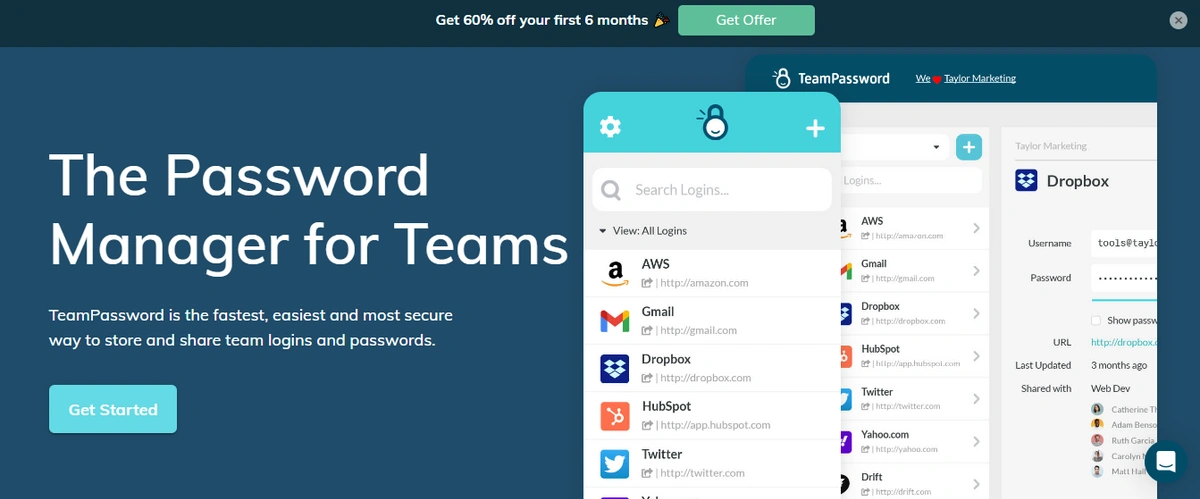
Best for: non-technical teams where adoption is the real risk. TeamPassword is $2.41 per user per month on the Standard annual plan with a 3-user minimum, undercutting Bitwarden Teams at $4.00.
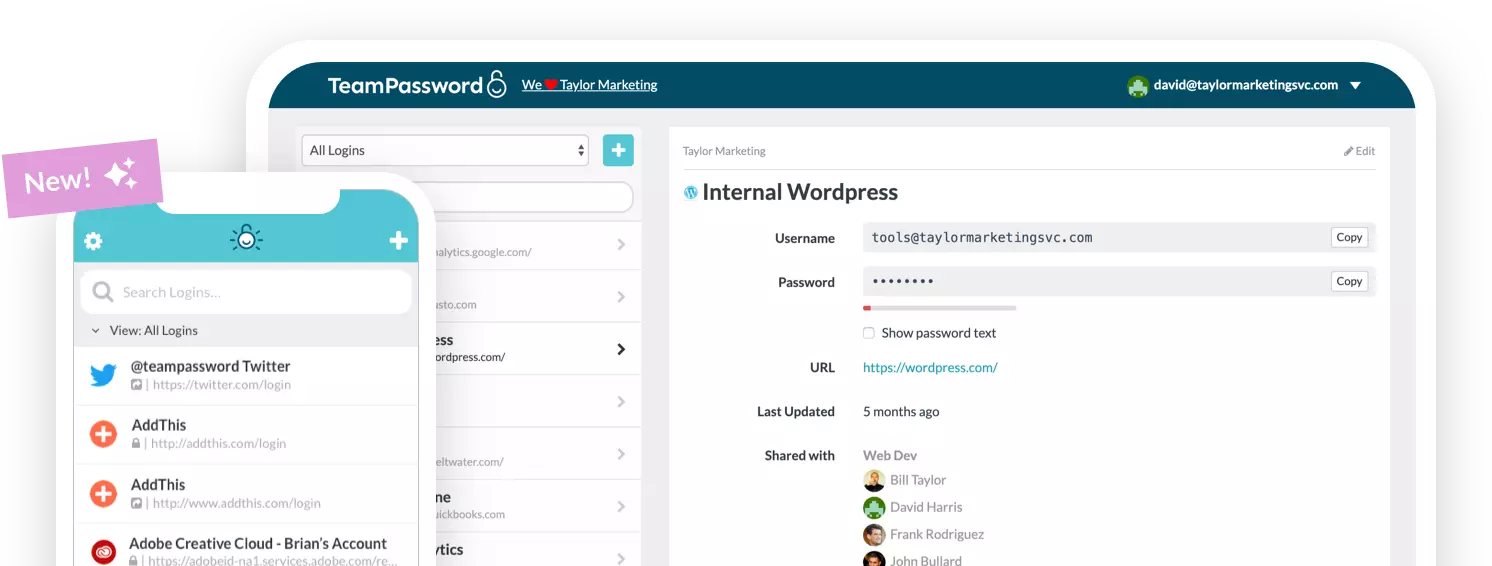
The case is narrow and specific. If the people who need these credentials are not technical, the deciding factor is whether they will actually use the tool. TeamPassword is built around groups, onboarding takes minutes, and support comes from people rather than a forum. Agencies with client accounts and small businesses sharing billing, social and vendor logins are the core case.
Be clear about the trade: we are not open source and we do not offer self-hosting. If either is why you chose Bitwarden, stay where you are.
TeamPassword Features
- Group-based sharing, with access revocable in a couple of clicks
- Built-in TOTP authenticator, so 2FA codes live alongside credentials
- Enforceable 2FA across every user in the organization
- Detailed activity logs, unlimited records and groups, SOC 2 certified
See full pricing, or the head-to-head TeamPassword vs Bitwarden Teams and Enterprise comparison.
2. 1Password
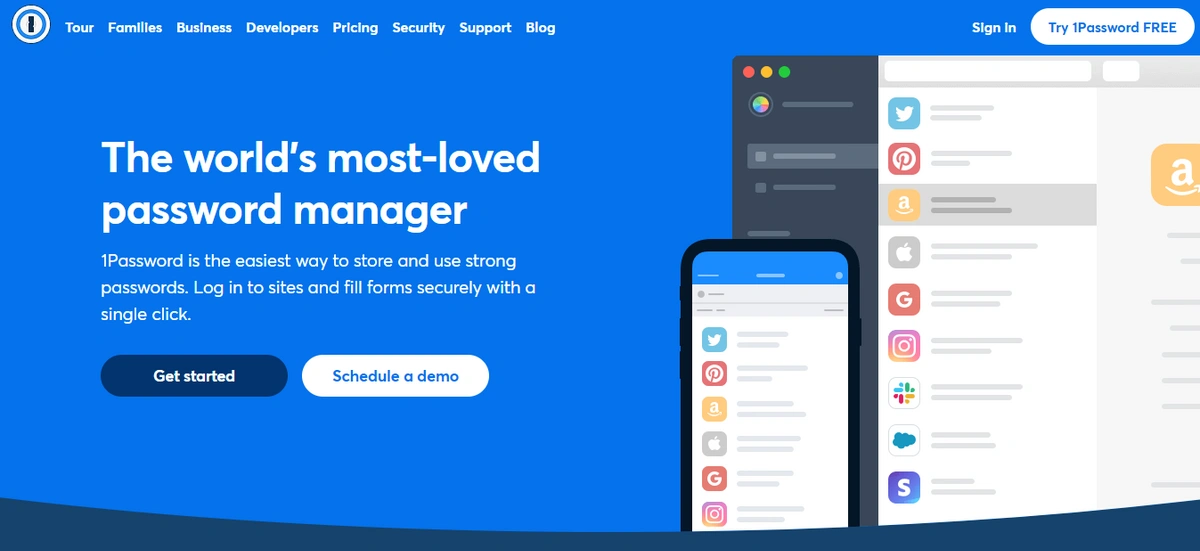
Best for: the biggest usability upgrade, if budget allows. 1Password Business is $8.99 per user per month after its March 2026 increase, with a Teams Starter Pack at $24.95 per month for 10 members and extra seats at $4.99.
If Bitwarden's interface is your complaint, 1Password is the most complete answer. It is the best-designed manager in the category, with the deepest integration ecosystem and strong passkey support added in August 2026. Its Secret Key means your master password alone cannot decrypt your vault, and it has no breach history.
The cost is real: more than double Bitwarden Teams, and there is no free tier, only a 14-day trial. See our 1Password alternatives guide if that gives you pause.
1Password Features
- Secret Key adds a second decryption factor beyond the master password
- Travel Mode temporarily removes vaults from devices when crossing borders
- Watchtower breach and password-health monitoring
- Free Families plan included with each Business seat
3. Proton Pass
Best for: staying open source while paying less. Proton Pass for Business is $1.99 per user per month on Essentials and $4.85 on Professional, with no seat minimum and a real free tier.
This is the only option here that keeps everything you liked about Bitwarden while costing half as much. Open source, end-to-end encrypted, Swiss-based, from the team behind Proton Mail, with email aliasing included. If your objection to Bitwarden is price rather than usability, this is the switch that makes sense.
It is the youngest product in this comparison and its admin console is less mature than Bitwarden's. It also does not offer self-hosting, so if that is your requirement, Passbolt is the closer match.
4. NordPass
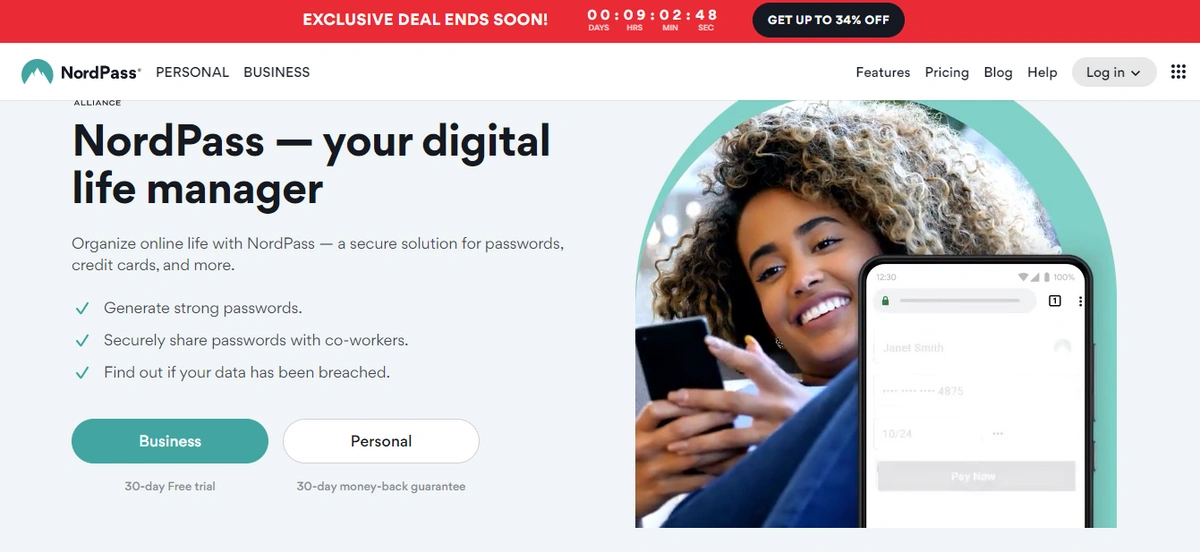
Best for: a consumer-polished interface on a budget. NordPass Business is $3.59 to $3.99 per user per month with a 5-user minimum, marginally under Bitwarden Teams.
NordPass has the most consumer-friendly interface of the budget options, which is the direct answer to Bitwarden feeling austere. Unlimited item storage, a Data Breach Scanner, TOTP and U2F support, no disclosed vault breach.
Two catches. NordPass Teams at $1.79 to $1.99 is sold only as a fixed 10-seat pack, so a six-person team pays an effective $2.98 to $3.32 per person actually using it. And it is closed source, so you lose auditability. More in our NordPass alternatives comparison.
NordPass Features
- Unlimited password, card and note storage
- Data Breach Scanner for compromised credentials
- TOTP and U2F multi-factor authentication
- Free tier, limited to one active session
5. Zoho Vault
Best for: teams that want a free tier with real sharing. Zoho Vault Professional is $4.50 per user per month, Enterprise $7.20, Standard around $0.90, with a 5-user minimum on Professional.
Zoho Vault's free forever tier includes shared vaults, role-based access and audit logs, which is more than Bitwarden's free tier does for a team. If your budget is zero and you need collaboration rather than individual storage, this is the strongest option on the page. Native Windows and Mac desktop apps arrived in 2026.
Zoho Vault Features
- Free forever tier with shared vaults and audit logs
- Deep integration with the wider Zoho suite
- Role-based access controls and detailed audit trails
- Direct password sharing with granular privileges
6. Keeper
Best for: compliance-heavy teams needing the deepest audit trail. Keeper Business sits around $3.75 per user per month with a 5-user minimum, but Keeper is now quote-only and no longer publishes per-seat rates, so treat that as indicative.
Keeper has more granular role-based access control and compliance reporting than Bitwarden, which is the main reason to move in a regulated environment. Its 2026 push into privileged access management adds capability and complexity.
Keeper Features
- Granular role-based access control and detailed audit reporting
- Compliance reporting for SOC 2, HIPAA and similar
- Privileged access management capabilities
- Secure file storage add-on
7. Dashlane (Omnix)
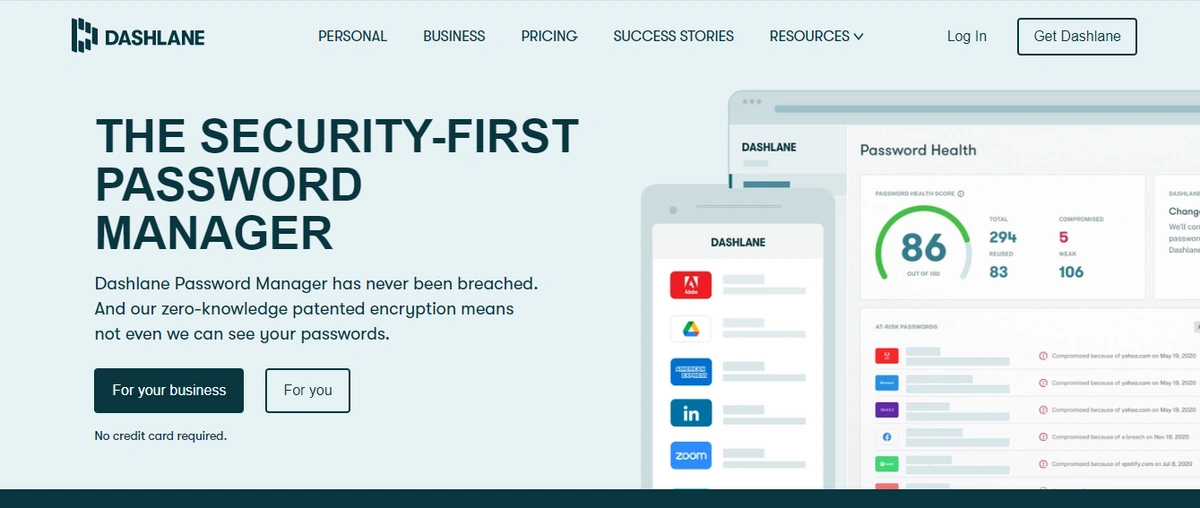
Best for: buyers who want credential-risk tooling, not just a vault. Dashlane rebranded its business line to Omnix, split across Omnix Password Management and Omnix Credential Protection. Per-seat pricing is no longer published, so you will need a quote.
Dashlane has moved upmarket toward credential risk and phishing protection. Coming from Bitwarden that is a genuine capability gain, at a genuine cost premium. Note that Dashlane discontinued its free plan in September 2025, and that unpublished pricing makes comparison harder than it should be.
Dashlane Features
- Credential risk and phishing monitoring
- Dark web monitoring
- SSO and provisioning integrations
- Admin console with security scoring
8. LastPass
Best for: almost nobody moving from Bitwarden. LastPass Teams is $4.25 per user per month, Business $7.00, Business Max $9.00.
Bitwarden's core appeal is verifiable security. LastPass is the opposite trade:
- 2022: attackers exfiltrated backup servers containing encrypted vaults plus some unencrypted metadata. Researchers later traced tens of millions of dollars in cryptocurrency theft to seed phrases in those vaults.
- 2025: a $24.5 million class-action settlement.
- November 2025: a UK ICO fine of £1,228,283 under UK GDPR, covering up to 1.6 million UK users.
- June 2026: a third-party supply-chain breach exposed customer contact details and support cases via its CRM. Vaults were not affected, but disclosure came ten days after discovery.
It also costs more than Bitwarden Teams. See our LastPass alternatives guide.
Self-Hosted Option
Passbolt is the one alternative that matches Bitwarden's self-hosting story: open source, API-first, with granular per-credential permissions, a free Community Edition and paid Pro tiers. If self-hosting is non-negotiable and you still want to move, this is your shortlist of one.
How to Switch Password Managers
- Export your vault from Bitwarden: Tools then Export vault, choosing
.csvor.json. - Create your new account and import the file. Most managers accept Bitwarden's CSV directly.
- Check that shared collections mapped correctly to the new tool's groups. This is where migrations usually go wrong, because permission models differ.
- Reinstall browser extensions and mobile apps for the whole team, and confirm autofill works before you cut over.
- Delete the export file and empty your trash. It is unencrypted plain text.
- Keep the Bitwarden account alive for a week as a fallback, then close it.
Which One Should You Pick?
- Bitwarden's interface is the problem and your team is non-technical? TeamPassword at $2.41.
- Want the biggest usability jump and can pay? 1Password at $8.99.
- Want to stay open source and pay less? Proton Pass at $1.99.
- Need self-hosting? Passbolt, or stay on Bitwarden.
- Budget is zero and you need sharing? Zoho Vault's free tier.
- Compliance and audit depth? Keeper.
- None of the above? Stay on Bitwarden. It is the best value in this category and switching for its own sake is not an upgrade.
Frequently Asked Questions
Why would I switch away from Bitwarden?
Usually usability rather than price or security. The interface is utilitarian, which suits technical teams and creates friction for non-technical ones, and adoption failure is the most common way a rollout dies. Other reasons are wanting managed support rather than community resources, and the January 2026 personal price rise, which took Premium from about $10 to about $20 a year. Business pricing was untouched.
Is anything cheaper than Bitwarden for a team?
Yes. Proton Pass Essentials at $1.99 per user per month and TeamPassword at $2.41 with a 3-user minimum both undercut Bitwarden Teams at $4.00. NordPass Business at $3.59 to $3.99 is marginally cheaper. Zoho Vault has a free forever tier that still includes shared vaults and audit logs.
Did Bitwarden raise its prices in 2026?
Yes, but only for personal plans. In January 2026 Bitwarden roughly doubled Premium from about $10 to about $20 per year, its first increase in a decade, and adjusted Families. Business pricing was not changed: Teams remains $4.00 and Enterprise $6.00.
What is the best Bitwarden alternative that is still open source?
Proton Pass, at $1.99 per user per month with a free tier, open source, end-to-end encrypted and Swiss-based. Passbolt is the other option if you want to self-host everything. Most alternatives, including TeamPassword, are closed source, so if auditability is why you chose Bitwarden, that narrows the field considerably.
Is Bitwarden good for non-technical teams?
It works, but it is not what Bitwarden optimizes for. The interface is functional rather than friendly, and teams without an IT contact often see low adoption, which undermines the point. If your colleagues will not open the vault, a simpler tool will protect more credentials in practice, even though Bitwarden is technically the stronger product.
Can I self-host a Bitwarden alternative?
Passbolt is the main option, with a free Community Edition and paid Pro tiers, built around per-credential permissions. Beyond that, self-hosting is rare here: TeamPassword, 1Password, NordPass, Dashlane, Keeper, Zoho Vault and LastPass are all hosted only. Bitwarden's self-hosting support is genuinely one of its strongest differentiators.
Try TeamPassword
If Bitwarden is technically fine but your team will not use it, that mismatch is the whole problem, and it is what TeamPassword was built for.
Group-based sharing with one-click revocation, a built-in TOTP authenticator, enforceable 2FA, detailed activity logs, unlimited records and groups, and support from actual people. Plans start at $2.41 per user per month with a 3-user minimum.
Try TeamPassword free for 14 days, no credit card required.