What is Identity as a Service (IDaaS)?
Every day, the digital landscape grows more complex as new applications, cloud-based tools, and automated services flood the market. For modern organizations, this rapid expansion creates a massive security challenge: how do you manage authentication, access privileges, and multi-factor authentication across hundreds of different platforms from a single point of entry?
Because these digital products are built by various global suppliers, achieving a seamless single sign-on (SSO) experience is difficult. This is why Identity as a Service (IDaaS) has become a cornerstone of modern cybersecurity infrastructure. Organizations use IDaaS to verify the identity of team members and ensure that sensitive apps, networks, and data are only accessible to those who truly need them.
TeamPassword’s cloud-based password manager helps teams share credentials securely without the enterprise price tag. Start your 14-day free trial and secure your team today!
Table of Contents
Breaking Down Identity as a Service (IDaaS)
Organizations today operate in hybrid environments, balancing legacy on-premise systems with decentralized cloud applications. Identity as a Service (IDaaS) is a cloud-based Identity and Access Management (IAM) solution that acts as a secure bridge between these platforms. It provides a centralized control plane for authentication, allowing users to sign in once to access their entire digital workspace.
In the current threat landscape, IDaaS has evolved beyond simple login screens. A comprehensive solution now includes:
- AI-Driven Monitoring: Using an activity log for security compliance to detect anomalies in real-time.
- Passwordless Authentication: Moving toward passkey technology to eliminate the vulnerabilities of traditional credentials.
- Advanced Multi-Device Verification: Securely authenticating users across laptops, phones, and tablets using top-tier authenticator apps.
- Automated Provisioning: Instantly granting or revoking access as employees join or leave the company.
- Machine Identity Management: Controlling access for non-human entities like AI agents and API integrations.
A high-profile example of IDaaS in action is Google Workspace. By signing into one primary account, users gain instant, governed access to Gmail, Drive, and integrated third-party SaaS tools. Administrators can then enforce strict security policies, such as MFA vs. 2FA requirements, from a single dashboard.
How Businesses Benefit from IDaaS
IDaaS isn't just a security tool; it's a productivity multiplier. It allows businesses to scale rapidly while minimizing the friction associated with onboarding and technical training. It is especially vital for securing remote teams who may be accessing sensitive data from public networks or international locations.
Core Advantages:
- Reduced Infrastructure Costs: Cloud deployment eliminates the need for expensive on-site identity servers and maintenance.
- Protection Against Modern Attacks: Centralized authentication helps mitigate risks like brute force attacks and credential stuffing.
- The Principle of Least Privilege: By following the principle of least privilege, organizations ensure users only have access to the specific resources required for their roles.
- Regulatory Compliance: IDaaS simplifies adherence to global data privacy laws like GDPR and CCPA through robust password security compliance reporting.
Essential Components of a Modern IDaaS Solution
Single Sign-On (SSO)
SSO is the primary feature of IDaaS. It allows team members to navigate their entire tool stack—from CRM to project management software—using one secure set of credentials. This reduces "password fatigue" and prevents employees from resorting to unsecure habits like writing passwords on sticky notes.
Adaptive Multi-Factor Authentication (MFA)
Security teams now categorize MFA into three layers of verification:
- Knowledge: A secure passphrase or secret code.
- Possession: A trusted device or a TOTP authenticator.
- Inheritance: Using various biometrics such as facial recognition or fingerprints.
Modern IDaaS uses "adaptive" MFA, meaning it only asks for extra verification if it detects a high-risk signal, such as a login from an unrecognized country or a potential man-in-the-middle attack.
Directory Administration & Access Control
IDaaS solutions offer scalable cloud directories that store identity data separately from operational data. This minimizes damage during a breach and allows for Role-Based Access Control (RBAC). Using a comprehensive RBAC guide, administrators can set granular permissions that update automatically across the organization.
Secure Authentication for Small and Mid-Sized Businesses
While enterprise IDaaS suites are powerful, they are often too expensive or complex for smaller agencies and startups. However, these businesses face the same sophisticated threats, including spear phishing and SIM swapping.
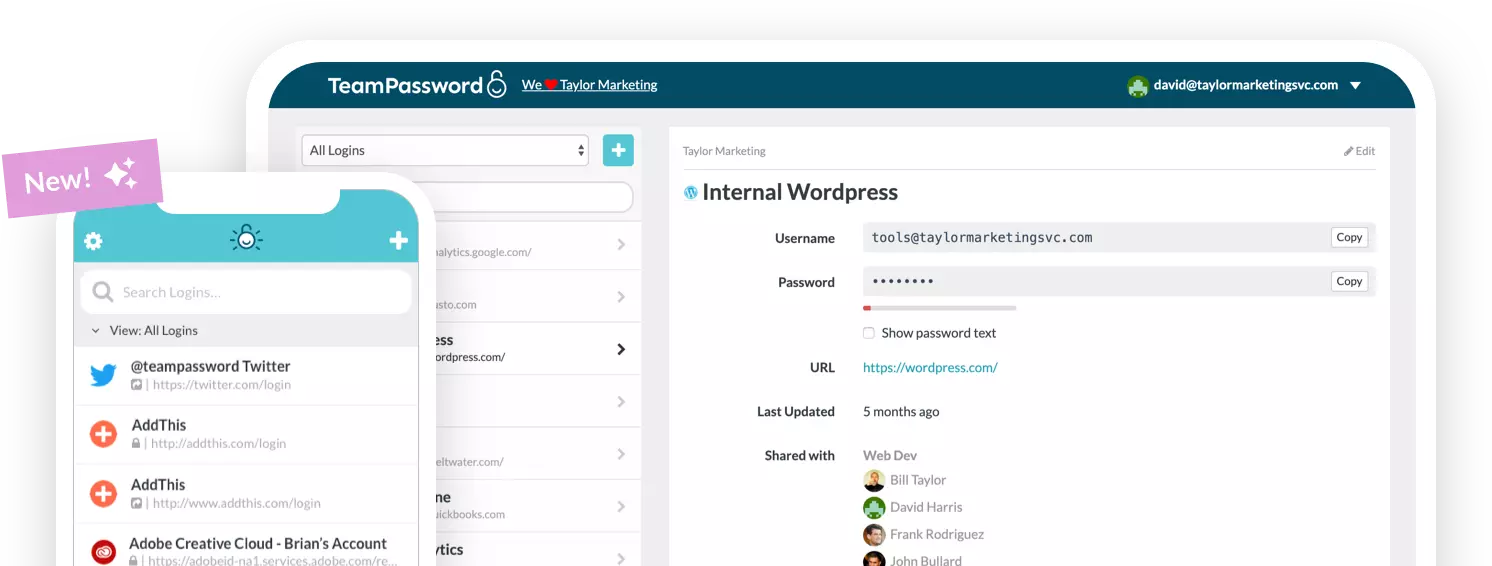
A secure password manager like TeamPassword serves as an "IDaaS-lite" solution for smaller teams. It centralizes credentials so that employees only need to remember one master login—their TeamPassword key—to access every shared account.
Why TeamPassword is the Ideal Choice for Growing Teams:
- Secure Group Sharing: Instead of sending passwords over unsecure messaging apps, you can create least-privilege password groups for specific projects or clients.
- Eliminate Weak Passwords: Use the built-in secure password generator to create unique, complex strings for every login.
- Cross-Platform Access: Whether on desktop or mobile, browser extensions allow for quick, secure logins.
- Protection of Shared Assets: It protects your most sensitive accounts from the top 5 most dangerous ways to store passwords.
If your organization is currently evaluating a LastPass alternative or looking for more agile 1Password, Bitwarden, or NordPass alternatives, TeamPassword provides the necessary security features—like end-to-end encryption and a clear 2FA rollout guide—without the overhead of a full enterprise suite.
Take Control of Your Digital Identity
Identity is the new perimeter. Whether you are implementing a full IDaaS solution or starting with a dedicated team password manager, the goal remains the same: ensuring that the right people have the right access at the right time. For a deep dive into protecting your organization, check out our ultimate guide to password security.
Ready to secure your business?
TeamPassword makes it easy to manage shared credentials and enforce strong security standards across your entire team. Start your free 14-day trial today and see how easy secure access can be!
おすすめの記事
The 5 Best Enterprise Password Vaults (2026 Comparison)
Standard password tools fail at enterprise scale. Learn how to choose a password manager for security, compliance (SOC ...
The Ultimate Employee Offboarding Guide for Data Security
What’s the plan when an employee leaves? Properly handing off company information when an employee leaves can be ...
The Best Accounting Tools for Marketing Agencies: Building Your FinOps Stack
Upgrade your marketing agency's FinOps stack. Discover the best accounting tools for global payroll, AI bookkeeping, and retainer ...
The 25 best startup tools you need to scale your business
Discover the 25 best startup tools to scale your business in 2026. Explore the top software for AI, ...