The Ultimate Tech Stack for Managing Freelancers: Sourcing, Async Collaboration, and Security

The freelance economy has matured far beyond its early days of simple gig work. Today, scaling businesses and marketing agencies rely on a sophisticated network of global, fractional talent. Whether you need a specialized UX designer in Berlin, a technical copywriter in Toronto, or a full-stack developer in Manila, the talent pool is no longer restricted by geography. However, managing a distributed, asynchronous workforce introduces a unique set of operational and cybersecurity challenges.
If you are treating your freelancers exactly like your full-time, in-house employees, you are likely operating with massive inefficiencies and exposing your business to significant risks. Managing freelancers requires a delicate balance: you must onboard them quickly so they can start producing value immediately, but you must also protect your company's core assets, ensuring they only have access to exactly what they need for the duration of their contract.
In the past, managing freelancers meant sending a messy chain of emails, paying them via unprotected wire transfers, and—most dangerously—sharing your company's master passwords over unsecured chat applications. Today, that approach is a recipe for compliance violations and data breaches. Building a modern tech stack for managing freelancers means prioritizing global compliance, asynchronous communication, streamlined asset management, and, above all, ironclad cybersecurity.
In this comprehensive guide, we will break down the ultimate software stack for finding, managing, and securing your freelance workforce, ensuring your agency can scale seamlessly without compromising its sensitive data.
Table of Contents
Why Managing Freelancers Requires a Unique Approach
Before diving into the specific tools, it is crucial to understand why your standard employee tech stack might fail when applied to freelancers. Full-time employees undergo extensive background checks, sign comprehensive long-term non-disclosure agreements, and are provisioned with company-owned, IT-managed hardware. They work within your established security perimeter.
Freelancers, on the other hand, operate outside of that perimeter. They use their own devices, work on their own Wi-Fi networks, and often juggle multiple clients simultaneously. Furthermore, their relationship with your company is inherently temporary. A contractor might be hired for a single two-week sprint and then never work with you again.
This transient nature creates a massive vulnerability known as "shadow access." Shadow access occurs when a freelancer's contract ends, but they retain access to your company's WordPress backend, premium software licenses, or social media accounts because someone forgot to manually change the shared passwords. To combat this, your freelance management stack must be built on the principle of "Zero Trust." You need tools that allow for instant provisioning and, more importantly, instant revocation of access.
Category 1: Sourcing & Global Compliance (The Foundation)
The first step in managing freelancers is actually finding them and bringing them on board legally. The days of simply sending money via PayPal and hoping for the best are over. International tax laws and contractor misclassification regulations are stricter than ever.
1. Upwork and Fiverr Pro: For Rapid Talent Sourcing
When you need to fill a skill gap immediately, marketplaces like Upwork and Fiverr Pro remain the industry standard. While both platforms started as basic gig marketplaces, they have significantly moved upstream to cater to enterprise clients and high-end agencies.
Upwork is excellent for sourcing long-term, complex project integration. It features robust time-tracking software that takes randomized screenshots of the freelancer's desktop, giving you peace of mind if you are paying an hourly rate rather than a fixed project fee. Fiverr Pro, on the other hand, is heavily vetted. Only a small percentage of applicants are accepted into the "Pro" tier, making it a fantastic resource when you need premium, highly polished creative assets (like brand identity design or voiceover work) with rapid turnaround times. Both platforms also act as an escrow service, protecting both the agency and the freelancer during the payment process.
2. Deel and Remote.com: For Long-Term Global Compliance
If you transition a freelancer into a long-term, full-time contractor role, relying on a marketplace's escrow system can become prohibitively expensive due to their percentage-based fees. At this stage, modern agencies turn to Employer of Record (EOR) and global payroll platforms like Deel or Remote.com.
These platforms have revolutionized the global talent market. If you are a U.S.-based company hiring a contractor in Germany, Deel handles all the localized tax compliance, creates locally compliant contracts, and collects the necessary W-8BEN forms. You simply pay a single monthly invoice in your local currency, and the platform distributes the funds to your contractors worldwide in their preferred currency (or even in cryptocurrency). This completely shields your agency from the legal nightmare of international contractor misclassification.
Category 2: Asynchronous Communication & Collaboration
When your lead developer is in Ukraine, your copywriter is in South Africa, and your project manager is in New York, trying to schedule a synchronous Zoom meeting is an exercise in futility. Modern freelance management requires fully embracing asynchronous communication.
3. Slack (With Slack Connect): Keeping Conversations Compartmentalized
Slack is likely already the central nervous system of your company. However, inviting freelancers into your primary Slack workspace can be dangerous. You do not want temporary contractors accidentally stumbling into your `#finance` or `#executive-planning` channels.
The solution is to leverage Slack's "Single-Channel Guests" feature or Slack Connect. This allows you to create an isolated channel specifically for a freelancer or an external agency. They can communicate seamlessly with your internal team, share files, and participate in project threads, but they are physically walled off from the rest of your company's internal communications. It provides the speed of instant messaging without the security risks of open access.
4. Loom and Veed: The Death of the Sync Meeting
How do you explain a complex visual bug on a website or walk a freelance writer through a detailed content brief without a live meeting? You use video messaging tools like Loom or Veed.
Loom allows you to record your screen, your camera, and your microphone simultaneously. You can record a five-minute walkthrough of a project's requirements and drop the link into Slack. The freelancer can watch it during their working hours, pause it, rewind it, and leave time-stamped comments with their questions. This eliminates the cognitive load of early morning or late-night meetings and ensures that nothing gets lost in translation, which is incredibly common with text-only briefs.
Category 3: Project & Asset Management
Freelancers cannot succeed if they don't have the context they need to execute their tasks. They need a centralized location to view project milestones, access brand assets, and understand your company's standard operating procedures.
5. Notion or Monday.com: Building the "Freelancer OS"
You cannot afford to spend three hours onboarding every single freelancer you hire. Tools like Notion or Monday.com allow you to build an automated "Freelance Operating System."
In Notion, you can create a dedicated portal for external contractors. This portal can house your brand guidelines (hex codes, typography rules, tone of voice documents), instructional videos on how to submit invoices, and a Kanban board tracking their specific deliverables. By giving freelancers a single source of truth, you eliminate the endless back-and-forth emails asking for high-resolution logo files or clarification on deadlines.
6. Envato Elements and Canva Teams: Standardizing Creative Assets
If you are managing freelance graphic designers, video editors, or web developers, they need raw materials to work with. Envato Elements offers a massive library of royalty-free stock footage, WordPress themes, graphic templates, and audio tracks. Similarly, Canva Teams is excellent for allowing freelance social media managers to create on-brand graphics using locked-in corporate templates.
The Security Challenge: Premium subscriptions to asset libraries like Envato, Canva, or Adobe Creative Cloud are expensive. Naturally, agencies want to share these enterprise accounts with their freelancers rather than buying a new, expensive seat for a contractor who will only be around for three weeks. However, sending the login credentials for your corporate Envato account over a Slack message is a massive security violation. If that freelancer uses the same password for their personal accounts and gets hacked, your agency's account is now compromised. Furthermore, when they leave, they take the password with them. This brings us to the most critical layer of your tech stack.
The Security & Access Layer: Securing Your Freelance Workforce
The tools listed above will make your agency faster, more compliant, and more collaborative. But none of that matters if a temporary contractor causes a data breach. The biggest mistake businesses make when managing freelancers is treating access control as an afterthought.
When you hire a freelancer, you inevitably have to give them access to the tools of your trade. A freelance web developer needs access to your client's Shopify backend or your domain registrar. A freelance social media manager needs access to your client's Instagram, X (Twitter), and LinkedIn accounts. A freelance virtual assistant might need access to your customer support software.
You cannot simply text them the passwords. You also cannot rely on them to use secure, randomized passwords on their own personal devices. You must retain absolute control over your digital perimeter.
7. TeamPassword: The Non-Negotiable Infrastructure
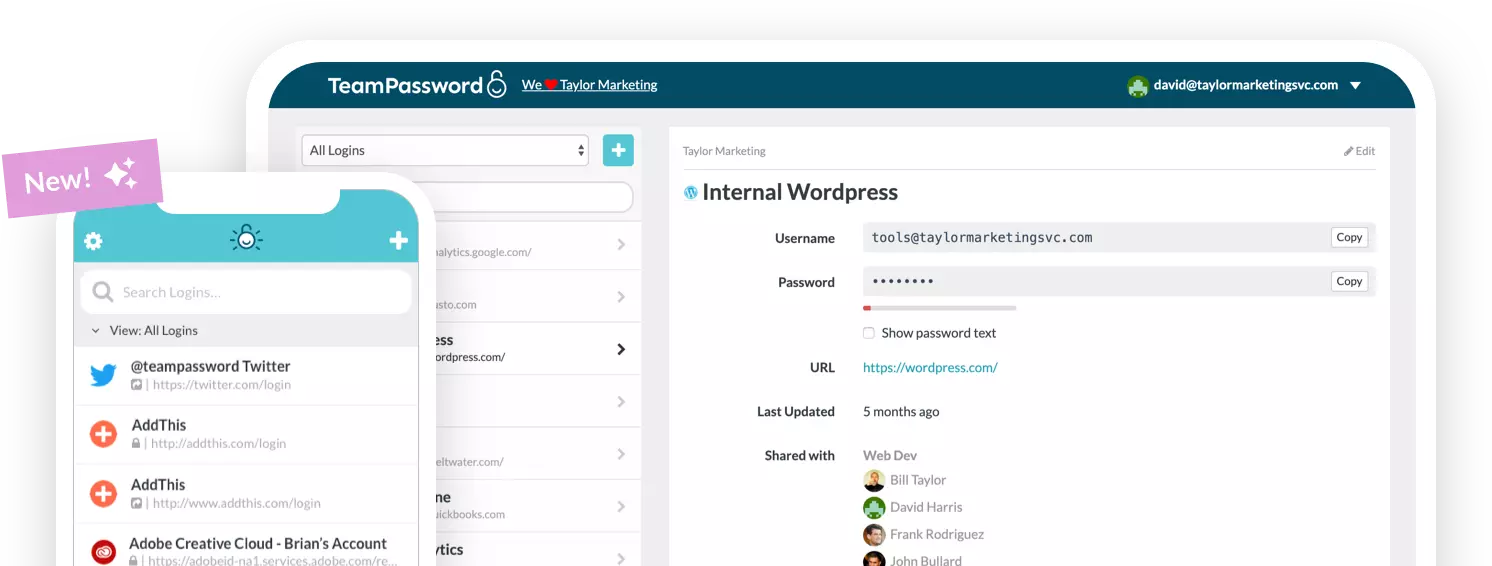
To safely manage freelancers, you must utilize a dedicated business password manager. TeamPassword is built specifically to handle the fluid, fast-paced nature of agency and collaborative work, making it the perfect solution for managing a transient freelance workforce.
Here is how integrating TeamPassword transforms your freelance management from a security liability into a fortified, seamless process:
- Secure Credential Sharing Without Exposing Passwords: With TeamPassword, you don't send a freelancer a password. You invite them to a specific group within your encrypted vault. When they need to log into your shared Envato account or a client's WordPress site, the TeamPassword browser extension automatically fills in the credentials for them. In many cases, the freelancer never even sees the actual password text, making it impossible for them to copy it, write it down, or reuse it elsewhere.
- Enforcing the Principle of Least Privilege: TeamPassword utilizes strict Role-Based Access Control (RBAC). You can organize your vault by client, project, or department. When you hire a freelance developer for "Client A," you simply add them to the "Client A" group. They get immediate access to the specific hosting providers and CMS logins they need, and they remain completely locked out of the passwords for Clients B, C, and D. You ensure they only have the exact amount of access required to do their job, and nothing more.
- Instant Revocation and Secure Offboarding: This is the most crucial feature for managing freelancers. When a contractor's project is completed on a Friday afternoon, how long does it take your IT manager to track down every single system they had access to and manually change the passwords? With TeamPassword, the offboarding process takes one click. You simply remove the freelancer from your team. Their access to all shared credentials is instantly revoked globally. You completely eliminate the threat of "shadow access" and ensure your digital perimeter is immediately sealed.
- Activity Logging and Audit Trails: If a mistake happens on a client's website or an unauthorized post goes out on social media, you need to know who did it. TeamPassword features comprehensive activity logging. You can see exactly which freelancer used which shared login, and at what time. This accountability is vital when managing workers who are operating thousands of miles away.
Conclusion: Build a Frictionless, Secure Ecosystem
Managing freelancers effectively is about building a frictionless ecosystem. You want to remove the operational roadblocks so that your global talent can do what you hired them to do: create incredible work. By leveraging sourcing tools like Upwork, compliance platforms like Deel, and async communication tools like Loom and Slack, you can build a highly efficient, distributed workforce.
But efficiency must never come at the cost of security. Temporary contractors should never become a permanent security risk to your agency or your clients. By placing a robust security and access layer at the heart of your operations, you can collaborate freely, share resources generously, and scale your business with total peace of mind.
Don't wait for a data breach or a rogue ex-contractor to expose your agency's vulnerabilities. Take absolute control of your digital assets and offboard freelancers safely and instantly.
Sign up for a free 14-day trial of TeamPassword today and build the secure foundation your freelance team needs to thrive.
Ready to secure your company's digital assets and improve your cybersecurity with TeamPassword? Sign up for a 14-day free trial to test our password manager with your coworkers today!
おすすめの記事
9 Tools for Marketing Agencies in 2026
Here are nine best marketing tools to manage your business, contract workers, freelancers and more. Also, start using ...
5 Cybersecurity Mistakes Every Boss Should Be Aware Of In 2026
If you manage employees, it’s crucial that you understand the risks they face and how you can protect ...
The 5 Best Enterprise Password Vaults (2026 Comparison)
Standard password tools fail at enterprise scale. Learn how to choose a password manager for security, compliance (SOC ...
The Ultimate Employee Offboarding Guide for Data Security
What’s the plan when an employee leaves? Properly handing off company information when an employee leaves can be ...