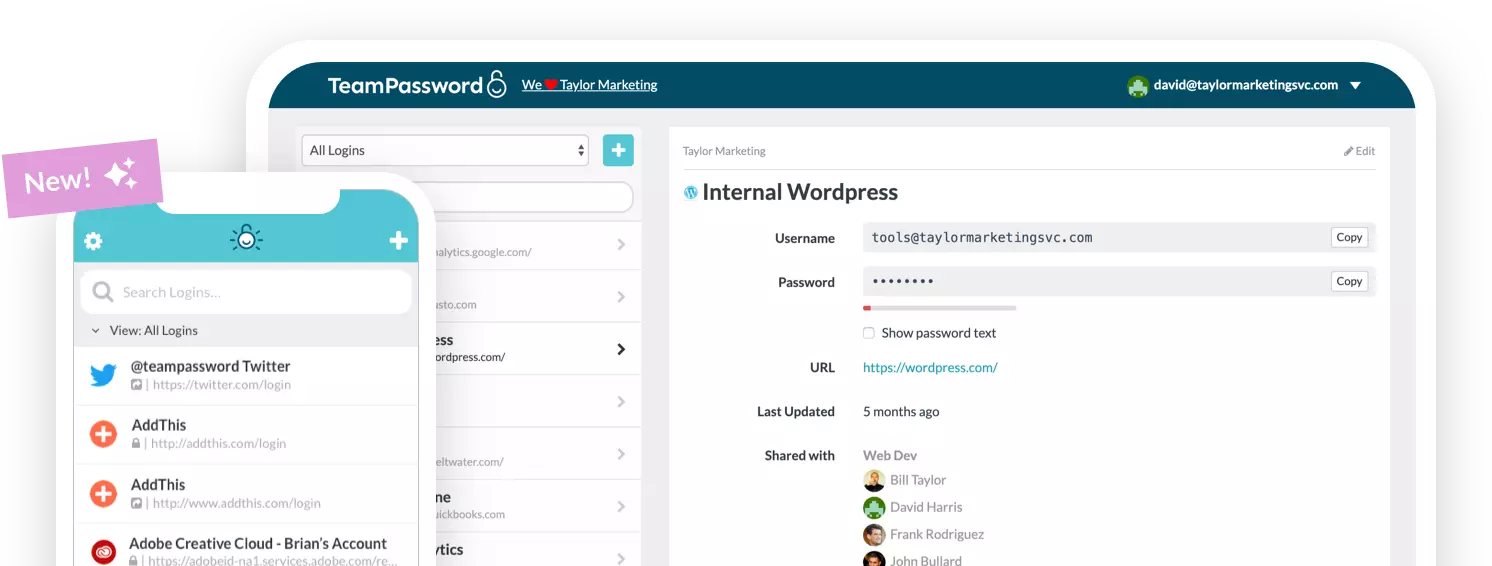
Password Management
Why Password Management Matters More Post COVID
As the pandemic seems to be coming to an end. Companies have started opening offices again. Learn why password management is more important.

As the pandemic seems to be coming to an end. Companies have started opening offices again. Learn why password management is more important.

The first Thursday of every May is World Password Day. Learn about "World Password Day" and the best security practices to keep you safe.

Learn why you need a password manager. The features that TeamPassword can offer for your personal use and your company use. |TeamPassword

Thinking about ditching passwords? The passwordless authentication future isn't here yet, but it may very well be on its way. | Teampassword
A few months ago our friends at in.security did a great webinar on all things related to passwords, and we wanted to share some of the key points. How are Passwords Stored and Used? When you register for a website or service, storing your password in plaintext in their database ...

There are an increasing number of stories focused on the danger for small businesses of not being secure online. To address this issue and ensure your business is prepared against common hacks and social engineering that target user passwords, here are some of the most common problems faced and how to address them.
Subscribe to our blog for more posts like this.