7 Tips for Marketing Project Management

Like any company, marketing agencies require rigorous project management to ensure teams execute tasks and objectives to meet deadlines. However, marketing project management is a unique beast. It requires a solid grasp of creative workflows, digital marketing tools, data analytics, and rapidly shifting consumer trends, all while managing people and resources efficiently.
This article explores seven actionable tips for marketing project management. By leveraging industry-leading methodologies, managers can ensure campaigns operate smoothly to reach their end goals on time and under budget.
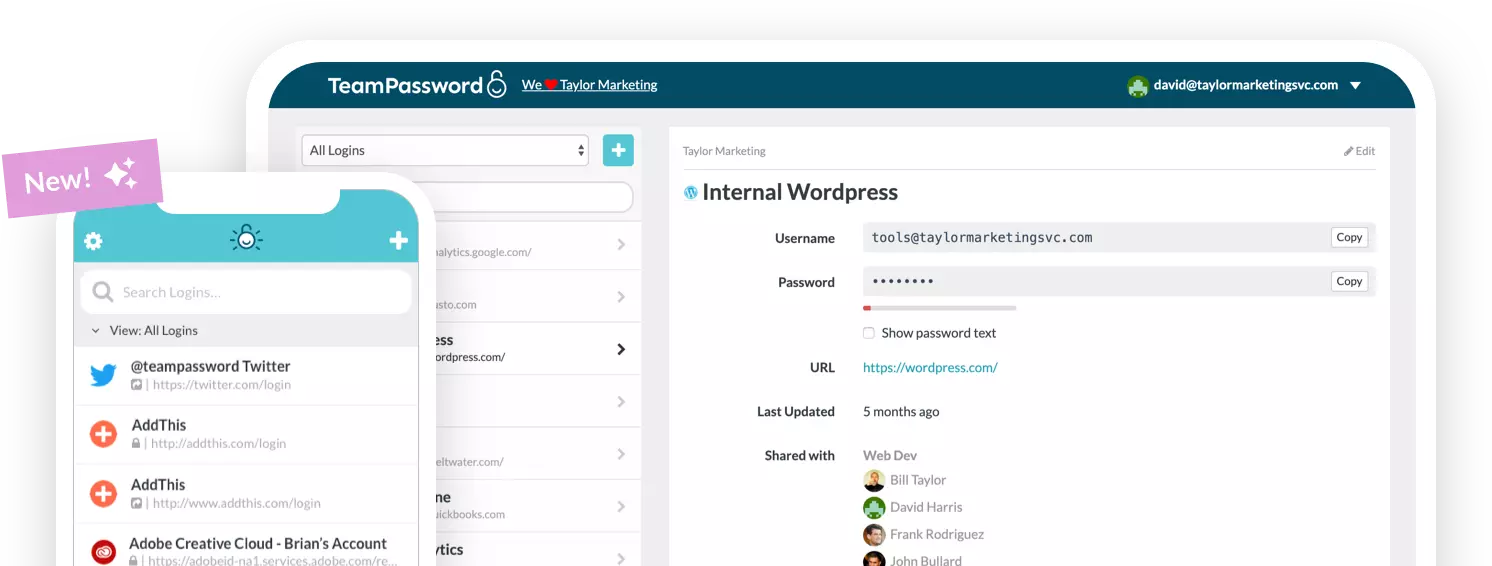
Marketing projects inevitably require teams to share credentials for expensive SaaS tools, social media accounts, and client applications. Protect your project's digital assets with a secure password management solution from TeamPassword. Sign up for a 14-day free trial today.
Table of Contents
What is Marketing Project Management?
Marketing project management is the role of planning, delegating, and managing tasks and objectives for marketing campaigns. A marketing project manager will usually set and monitor Key Performance Indicators (KPIs) to ensure teams meet the strategic goals and requirements for each project.
At an agency, marketing project managers often act as the critical bridge between the client and the creative team. They act as the company representative when meeting with clients to relay goals, and they translate those goals into actionable tasks for their internal copywriters, designers, and ad buyers.
Core Marketing Project Management Responsibilities
- Project scope: Outlining the specific tasks, deliverables, and KPIs required to meet a project's objectives and end goal.
- Resources: Selecting the people, software tools, budget allocations, and other elements required to complete the project efficiently.
- Timelines: Planning the project's timeline, establishing milestones, and delegating tasks to ensure the project launches on the agreed-upon date.
- Budgeting: Planning and monitoring the project's financial constraints—including carefully tracking the internal team's billable hours to maintain agency profitability.
7 Tips for Marketing Project Management
1. Use a Dedicated Project Management Tool
Using a project management tool might seem like a no-brainer, but an alarming number of companies still rely on messy spreadsheets and disjointed email threads to plan and execute tasks. While spreadsheets are cheap, a dedicated project management tool can significantly increase efficiency with features to automate mundane tasks, visualize workflows, and centralize communication.
Here are five popular project management tools perfectly suited for marketing agencies:
- Asana: One of the most popular project management tools for startups and agencies. It's a comprehensive tool with fantastic features to streamline campaigns. You also have tons of native integrations relevant to marketing, including Adobe Creative Cloud, Zapier, and Google Workspace.
- Monday.com: A highly visual, powerful project management tool. Monday.com shines in its customizable dashboards and features robust integrations with marketing staples like Typeform, Hootsuite, and Facebook Ads.
- Basecamp: An affordable yet comprehensive project management tool with an emphasis on remote teams. You can automate check-in messages so team members can report back daily with progress or flag issues, and easily invite clients as "guests" to view project progress.
- Notion: A unique UI that feels more like navigating a highly organized wiki than a traditional task manager. With Notion, marketing agencies can build central databases to outline client brand guidelines, content calendars, and standard operating procedures (SOPs).
- Scoro: A platform with powerful budgeting and billing tracking features. You can quickly generate utilization reports to provide financial feedback to agency management, keeping your projects profitable.
2. Secure Your Tools With a Password Manager
Marketing project managers must also ensure that projects operate safely. Marketers are constantly sharing credentials for SEO tools, social media platforms, CMS backends (like WordPress), and premium creative software. Attempting to manage these shared logins via spreadsheets or Slack messages is a massive security vulnerability.
A business password manager makes sharing credentials with internal teams, external contractors, and clients completely secure. Project managers retain complete, centralized control over the agency's digital assets.
Here is how TeamPassword makes credential sharing secure and efficient for marketing teams:
- Role-Based Access Control: Create specific groups (e.g., "Client A Social Accounts" or "SEO Team Tools"). Separate teams so you only share access with the people actively working on that specific project, enforcing the principle of least privilege.
- Secure Freelancer Collaboration: Create separate groups to share credentials with external freelancers. When their contract ends, you can revoke their access with a single click, preventing "shadow access."
- Built-in Password Generator: Ensure your team never reuses weak passwords across different client accounts. Generate robust, mathematically complex credentials for every new tool.
- Activity Logging: Monitor exactly who logged into which client account and when, ensuring total accountability across your distributed marketing team.
3. Plan Marketing Projects With Cross-Functional Team Members
Project managers must include team members during the earliest planning phases of a new campaign. If your project involves multiple departments—such as SEO, Paid Ads, and Graphic Design—it is vital to break down organizational silos and get input from each discipline to establish realistic budgets and timelines.
If a project manager simply dictates a timeline without consulting the lead graphic designer, they may completely underestimate the time required for video rendering or client revisions. Getting planning input from team members gives them ownership of the project. Making coworkers feel valued increases productivity and sets a standard for transparent communication early on.
4. Follow the Standard Project Lifecycle Phases
Marketing project management is no different from any other professional project management discipline. To avoid chaotic, reactive workflows, marketing managers should look to the Project Management Institute (PMI), the world's leading authority on project management. According to PMI’s PMBOK (Project Management Body of Knowledge) framework, a successful project must follow five distinct phases:
- Initiation: Start by defining the project's high-level goals, identifying key stakeholders (the client and internal directors), and establishing initial budget constraints.
- Planning: This phase outlines the exact roadmap. The project manager must define the detailed scope, create a timeline with hard milestones, and assign specific roles and responsibilities to the marketing team.
- Execution: The team gets to work. The project manager allocates resources, unblocks team members, and ensures deliverables are actively being produced.
- Monitoring and Controlling: Running simultaneously with execution, the project manager tracks KPIs to ensure the team is meeting milestones. If an ad campaign is underperforming, the manager pivots the strategy here.
- Closing: The project is officially wrapped. The manager delivers the final assets to the client, terminates temporary freelancer contracts, and finalizes the budget reports.
5. Define Clear, SMART Goals
Defining clear marketing goals during the initiation phase is crucial. Avoid vague objectives like "increase email subscribers" or "get more traffic." If you increase your subscribers by exactly one person, you have technically reached that goal, but the project is hardly a success.
To set truly effective benchmarks, marketing managers should adopt the SMART goal methodology, heavily championed by marketing authorities like HubSpot. SMART stands for Specific, Measurable, Attainable, Relevant, and Time-bound.
A SMART goal transforms a vague desire into an actionable target. Instead of "grow social media," a SMART goal is: "Increase our client's Instagram follower count by 15% (Measurable/Specific) by the end of Q3 (Time-bound) through a targeted influencer campaign (Attainable/Relevant), resulting in $50,000 of attributed revenue."
6. Implement a Change-Control Process to Avoid "Scope Creep"
According to historical data from the Project Management Institute's Pulse of the Profession report, nearly 50% of all projects experience "scope creep." In marketing, scope creep happens when a client asks for "just one more quick revision" or decides they want a TikTok video added to a campaign that was only budgeted for Facebook Ads.
To protect your agency's profitability, project managers must implement a strict change-control process. At the beginning of the project, establish a clear Statement of Work (SOW) that outlines exactly how many revisions are included. If a client requests work outside of that scope, the project manager must confidently present a "Change Order," detailing how much extra time and money the new request will cost. Setting these boundaries early prevents team burnout and keeps margins healthy.
7. Conduct Post-Project Reviews (Retrospectives)
The closing phase of a project shouldn't just be about sending the final invoice; it must include a team retrospective. Once a marketing campaign concludes, gather your core team to discuss what went right, what went wrong, and what bottlenecks slowed the process down.
Did the creative team spend too much time waiting for client approvals? Did the ad spend yield the expected Return on Ad Spend (ROAS)? By meticulously logging this historical data, project managers can create highly optimized templates and Standard Operating Procedures (SOPs) for the next campaign. Continuous improvement is the hallmark of an elite marketing project manager.
Take Control of Your Marketing Projects
Effective marketing project management is the difference between a chaotic, unprofitable agency and a streamlined, highly successful firm. By utilizing the right software, following authoritative project lifecycles, and setting strict boundaries against scope creep, your team can consistently deliver incredible results for your clients.
However, none of those strategies matter if a compromised password brings your entire operation to a halt. Protect your client's trust, secure your marketing assets, and streamline your team's workflow with an enterprise-grade password manager.
- Integrated TOTP Authenticator: Generate time-based one-time passcodes directly within TeamPassword, eliminating the need for separate authenticator apps on your phone.
- Enforceable 2FA: Mandate two-factor authentication for every user across your organization, ensuring a consistent and high standard of security.
- Detailed Activity Logs: Maintain full visibility with a complete audit trail of who accessed what and when, perfect for security audits and accountability.
- Unlimited Records & Groups: Store an infinite number of logins and organize them into logical groups by team, project, or client for easy access and management.
- Multiple User-Roles: Assign granular permissions to control exactly who can view, edit, and create credentials, ensuring access is granted only where it's needed.
- Free Google Sign-In: Simplify onboarding and daily access with secure, one-click login using your team's existing Google accounts.
- One-Time Share: Securely share a single password with an external contractor or partner for a limited time, without giving them permanent access to your records.
Sign up for a 14-day free trial of TeamPassword today and build a secure foundation for your next big marketing campaign.
Posts Recomendados
The 5 Best Enterprise Password Vaults (2026 Comparison)
Standard password tools fail at enterprise scale. Learn how to choose a password manager for security, compliance (SOC ...
The Ultimate Employee Offboarding Guide for Data Security
What’s the plan when an employee leaves? Properly handing off company information when an employee leaves can be ...
The Best Accounting Tools for Marketing Agencies: Building Your FinOps Stack
Upgrade your marketing agency's FinOps stack. Discover the best accounting tools for global payroll, AI bookkeeping, and retainer ...
The 25 best startup tools you need to scale your business
Discover the 25 best startup tools to scale your business in 2026. Explore the top software for AI, ...
Fortaleça a segurança das suas senhas
O melhor software para gerar e gerenciar suas senhas corretamente.