facebook social icon
x social icon
linkedin social icon
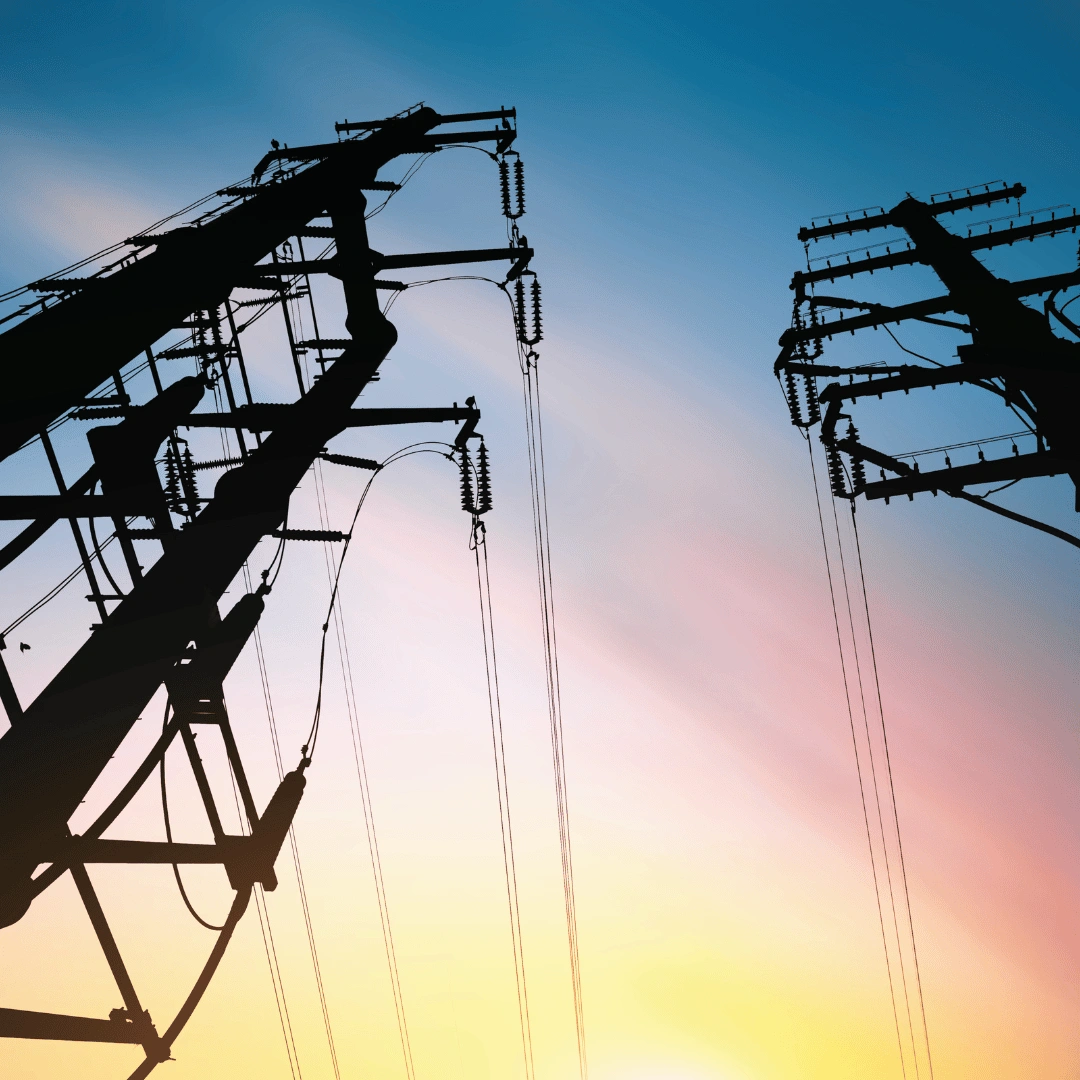
Electrical power lines against a colorful sky

Cybersecurity for Utilities: Common Threats & Best Practices

April 29, 20267 min read

Cybersecurity

Utility companies, such as those that provide electricity, natural gas, and water, are highly lucrative targets for modern cyberattacks. Recent reports from specialized Industrial Control System (ICS) security firms, such as Dragos and Mandiant, highlight a sharp increase in threat groups—including nation-state actors and ransomware syndicates—actively probing critical infrastructure.

Organizations within the utility sector must continuously modernize their cybersecurity posture to prevent dangerous threats. A successful breach in this sector goes beyond financial loss; it can result in physical equipment damage and catastrophic disruptions to the communities that rely on these life-sustaining services.

In this cybersecurity for utilities guide, we'll discuss the common threats these companies are up against, the unique challenges of protecting critical infrastructure, and the modern best practices required to mitigate risks.

First, here are the five key things to understand about cybersecurity for utilities:

  • The utility sector manages both standard business networks (IT) and the physical systems that deliver water, gas, and power (OT).
  • Connecting legacy infrastructure to modern "smart grids" expands the attack surface, creating dangerous new vulnerabilities.
  • Utility companies face immense federal pressure to adopt a Zero Trust Architecture and comply with strict compliance frameworks.
  • Companies can quickly improve their security posture by deploying AI-driven threat detection, adopting modern password guidelines, securing physical infrastructure, and segmenting their networks.
  • TeamPassword can help utility companies protect critical operational data through secure, encrypted credential management.
Table of Contents

    Understanding the Utilities Sector: IT/OT Convergence

    The utilities sector includes a wide range of companies that supply electricity, water, natural gas, and sewage services. Securing these companies requires understanding the difference between two distinct environments: Information Technology (IT) and Operational Technology (OT).

    Historically, a utility company's business computers (IT) were completely isolated—or "air-gapped"—from the OT and SCADA (Supervisory Control and Data Acquisition) systems that physically control valves, breakers, and grid sensors. However, modern efficiency demands have led to the rise of the "smart grid."

    Today, OT and IT networks are converging. Digital meters automatically report usage, and grid analytics predict outages before they happen. While this connectivity lowers costs and boosts efficiency, it also means that a hacker who breaches a standard employee's email account could potentially pivot into the systems that control the physical power grid.

    Common Cyber Threats Facing Utility Companies

    Every new digital sensor or smart integration extends the attack surface. Today, utility companies face a sophisticated landscape of cyber threats:

    • Ransomware on Critical Infrastructure: Attackers deploy malicious software to lock access to critical computer systems. Modern ransomware gangs increasingly target energy and water sectors, knowing that the intense pressure to restore public services makes these companies more likely to pay high ransoms.
    • AI-Powered Phishing: Phishing is no longer easy to spot. Cybercriminals now use Generative AI to craft flawless, highly personalized emails that trick employees into handing over network credentials or downloading malware.
    • Nation-State Probes: Unlike financially motivated hackers, nation-state actors often infiltrate utility networks to establish "persistence"—quietly lurking in the system so they can disrupt critical infrastructure during times of geopolitical conflict.

    Challenges & Roadblocks in Utility Cybersecurity

    Cybersecurity for utilities presents unique hurdles that standard corporate IT does not. To start, many OT environments rely on legacy systems built decades ago. These systems were designed for maximum uptime and reliability, not security. They often cannot be patched, taken offline, or equipped with modern antivirus software without risking a service outage.

    Another challenge is the intense regulatory environment. Organizations must comply with evolving standards set forth by the North American Electric Reliability Corporation (NERC). Furthermore, federal agencies like the Cybersecurity and Infrastructure Security Agency (CISA) increasingly expect utilities to adopt strict security benchmarks to protect national security.

    Finally, cost is a consistent roadblock. Because energy and water rates are heavily regulated, utility companies must operate on tight margins, making it difficult to budget for massive infrastructure and security overhauls.

    Cybersecurity for Utilities: 7 Best Practices

    Despite these challenges, utility companies can take decisive, actionable steps to modernize their security posture. These steps include:

    #1. Implement AI-Driven Threat Detection

    Threat detection is the process of identifying potential cyber risks before they compromise the network. Because modern attackers use autonomous agents to map networks, utilities can no longer rely on manual audits or basic antivirus. Instead, companies must deploy AI-driven Endpoint Detection and Response (EDR) and network anomaly detection tools. These systems monitor the network in real-time, instantly flagging unusual behavior—like a business workstation attempting to communicate with a SCADA controller.

    #2. Secure Physical Utility Infrastructure

    Cybersecurity also requires physical security. Attackers or vandals may target remote substations, pump stations, or server rooms. Utilities must secure physical infrastructure by implementing robust access controls, requiring fobs or biometrics for entry. Surveillance cameras, perimeter sensors, and tamper-evident hardware should be standard across all remote facilities.

    #3. Segment Networks and Adopt Zero Trust

    Because IT and OT networks are converging, utilities must adopt a Zero Trust Architecture. This means no user, device, or application is trusted by default, even if they are already inside the corporate network. Furthermore, strict network segmentation must be enforced. If an employee's laptop is compromised by malware, firewalls and strict access policies should make it impossible for that malware to cross over into the OT environment.

    #4. Train Staff on Advanced Security Protocols

    Human error remains a leading cause of data breaches. It's critical to ensure your employees understand modern security protocols. Move beyond basic training and educate your team on the dangers of AI-generated phishing, deepfake voice scams, and the specific risks associated with OT systems. Staff must understand the critical importance of never connecting unauthorized personal devices or USB drives to operational hardware.

    #5. Implement Air-Gapped Data Backups

    If ransomware strikes, having a recovery plan and robust data backups can prevent prolonged utility outages. However, backups must be immutable and "air-gapped" (physically or logically separated from the main network). If backups are stored on the same connected network as the primary data, ransomware will simply encrypt the backups, too.

    #6. Adopt Modern Password Guidelines & MFA

    Securing the credentials that access your systems is your most critical line of defense. The latest NIST SP 800-63B guidelines have modernized how we handle passwords. Instead of forcing users to use a confusing mix of special characters, NIST advises prioritizing length. Using ultra-long "passphrases" (15+ characters) is exponentially more secure against brute-force attacks.

    Additionally, utilities must enforce Phishing-Resistant Multi-Factor Authentication (MFA) across all remote access points. To manage these complex passphrases safely, teams should abandon shared spreadsheets and adopt a dedicated password manager. This ensures credentials are encrypted, access is logged, and sharing is tightly controlled.

    #7. Use Federal Security Frameworks as a Guide

    You don't have to build a security strategy from scratch. Utilize federal frameworks designed specifically for critical infrastructure. For example, CISA offers the Cross-Sector Cybersecurity Performance Goals (CPGs), which provide prioritized security practices for critical infrastructure operators. Additionally, the Department of Energy offers the Cybersecurity Capability Maturity Model (C2M2) to help utility companies assess and benchmark their security capabilities.

    Protect Your Critical Systems With TeamPassword

    By adopting Zero Trust principles, securing the IT/OT boundary, and following federal frameworks, utility companies can defend their critical infrastructure against sophisticated modern threats.

    One immediate step you can take today is locking down your credential management. Weak, reused, or poorly shared passwords are the easiest way for an attacker to bypass your firewalls.

    TeamPassword can help. Our password management tool is designed for secure, organizational sharing with an intuitive interface, providing the exact features critical infrastructure teams need:

    • Comprehensive activity logs for audit and compliance tracking
    • Enforceable multi-factor authentication (MFA)
    • Organization via unlimited groups, enabling strict "Principle of Least Privilege" access
    • AES 256-bit zero-knowledge encryption (meaning we cannot see or access your operational data)
    • Budget-friendly, competitive pricing

    Don't leave your infrastructure access to chance. Try a 14-day, no-commitment free trial of TeamPassword today!

    パスワードの安全性を高める

    パスワードを生成し、正しく管理させるための最適なソフトウェア

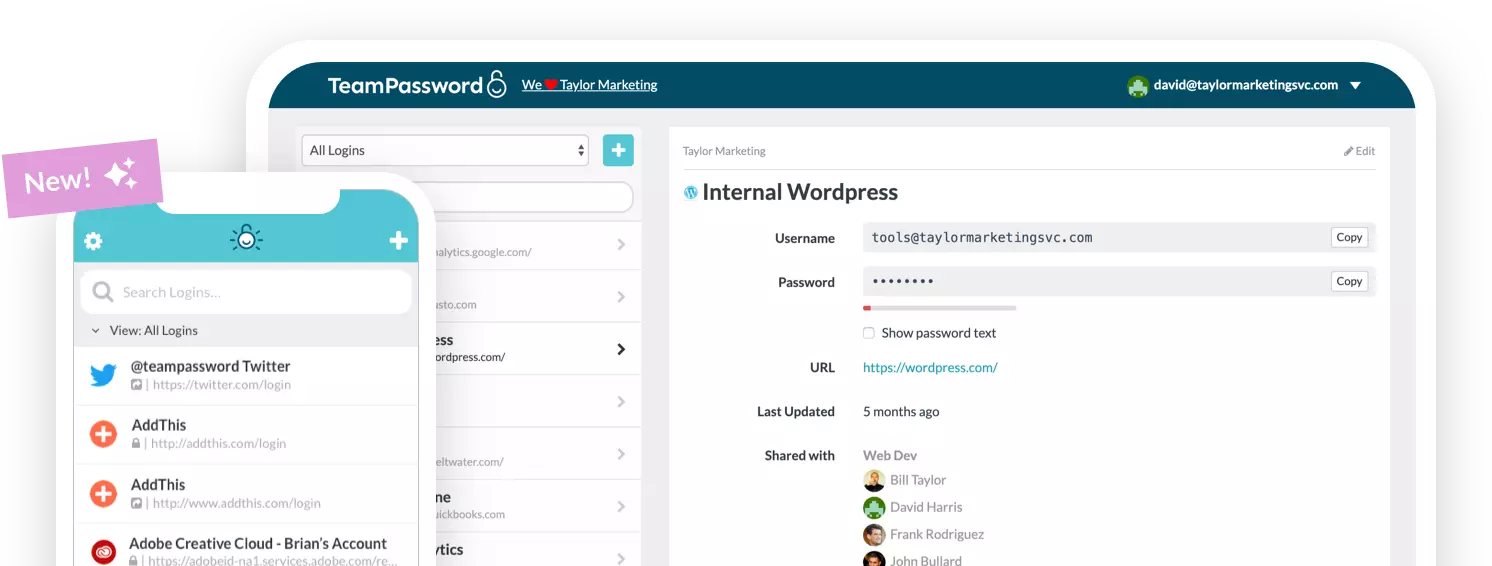
    Images of the TeamPassword mobile and desktop apps
    Quotes Icon

    Andrew M.

    Andrew M.

    オペレーション担当副社長

    "私たちは小規模な非営利団体のためにTeamPasswordを使用していますが、私たちのニーズにうまく対応しています。"

    今すぐ始める

    Table Of Contents

      関連記事
      The words "Bring Your Own Device" with the first letters (BYOD) in red, against a blue background with a computer icon that has a cracked lock on its screen.

      Cybersecurity

      April 21, 202610 min read

      7 Cybersecurity Risks of Using Personal Devices for Work

      Bring your own device policies are increasingly popular as remote work trends continue. With them come risks. This ...

      username and password in green lettering

      Cybersecurity

      April 20, 202620 min read

      What Is Password Management? [Complete Guide]

      What is password management? Learn how to effectively manage your passwords with these best practices, tools, and more. ...

      Microsoft Windows updating on a laptop

      Cybersecurity

      April 20, 20266 min read

      How to Disable Microsoft Edge Manager in 3 Steps

      Keeping track of passwords has gotten out of hand. Edge offers a built-in solution, which might not be ...

      最新情報をお見逃しなく!

      このような投稿をもっと読みたい方は、ブログを購読してください。

      Promotional image